We continue our series of features looking at case studies from other police forces.
***********Senior officers caution against overly enthusiastic use of body worn video at the expense of other evidence and highlight ‘caveats’ attached to armed officers wearing them.
By – Josh Loeb – Police Oracle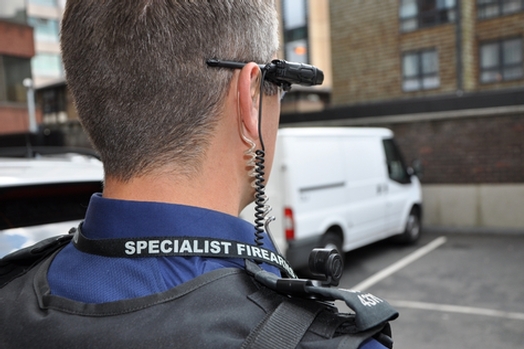
A force’s landmark trial of body worn video (BWV) on firearms officers is “proceeding cautiously” amid awareness among senior officers that footage captured via compact bodycams may not always tell the full story.
Deputy Chief Constable Simon Chesterman, national lead on armed policing, warned there were “caveats” around using the devices following an announcement that firearms officers are carrying out their duties while wearing BWV in London for the first time.
The Metropolitan Police’s Trojan Proactive Unit is carrying out what is thought to be the largest trial in BWV, and the armed unit is the first of its kind in the UK to be equipped with the devices.
DCC Chesterman, of the Civil Nuclear Constabulary, said the trial was “absolutely right and in the interest of the public and officers themselves”.
But he cautioned against any “overly zealous” embracing of video evidence at the expense of other, more traditional forms of evidence. He added that there were problems around use of the devices that specifically affect firearms officers.
“Most officers wear the cameras on their chest – and the very nature of firearms of officers is such that when they raise their arms, all you are going to see on the camera is the back of their arm,” he said. “It is not as simple as just putting a camera on a police officer.
“We have been doing trials with the Home Office to try and find the best place to put the camera on firearms officers, because as soon as they raise their weapon, they are obliterating the camera.”
Some studies in the United States have suggested that firearms officers should wear not one but three cameras – one on their chest, one on their weapon and one on their head.
DCC Chesterman said it was important to bear in mind that the technology “may not capture some things that the eye can see”.
“Clearly the camera is not as sophisticated as the human eye,” he added. “The officer will have been privy to the briefings, intelligence and emotion on scene. These are all things the camera cannot pick up.
“It is about educating people to understand that the camera cannot possibly pick up on everything that the officer is picking up on. And likewise, if a suspect is raising a gun, the officer might hone in on that, but there will also be other stuff going on at the same time that the camera will also pick up on equally.”